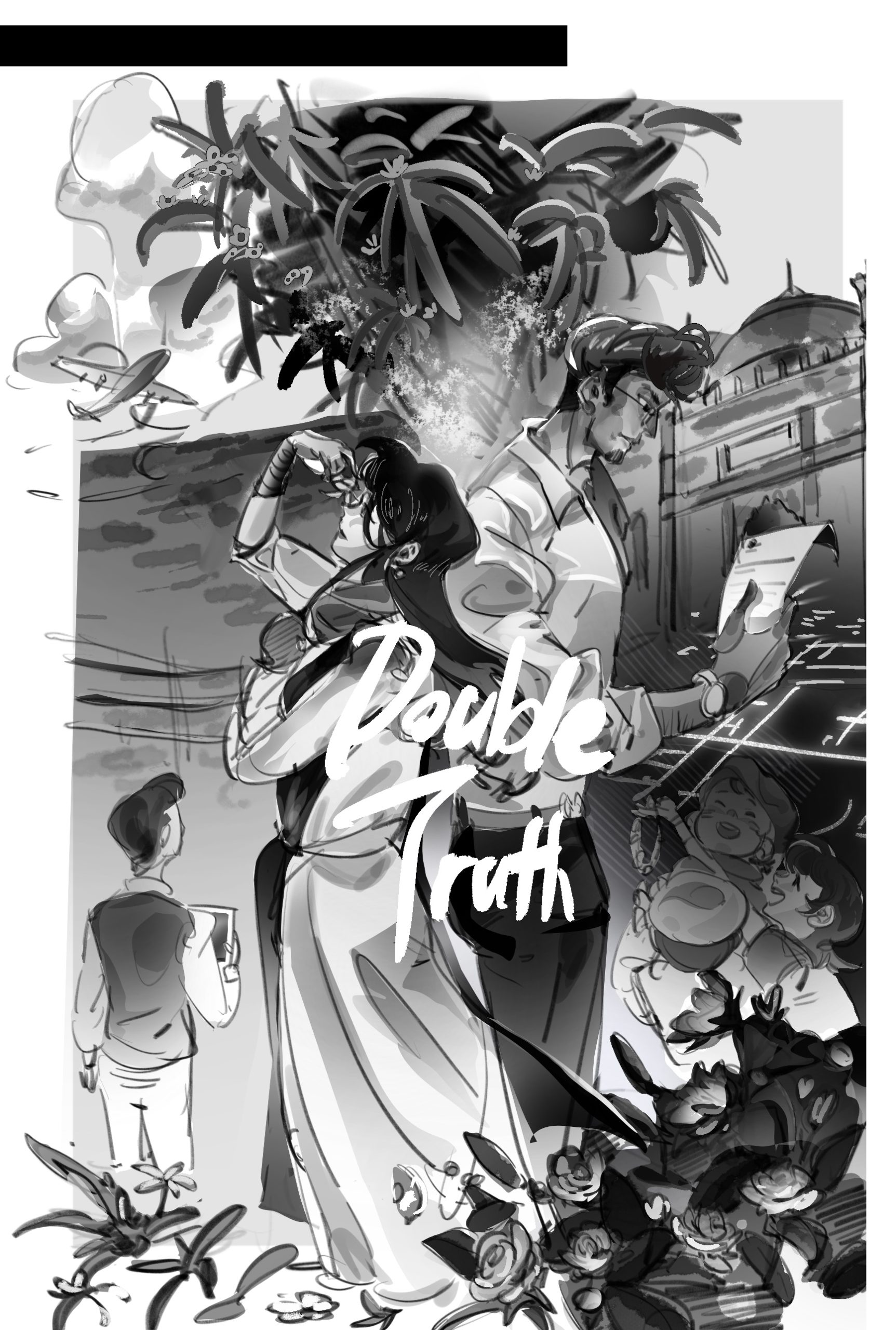
Asif Chowdhury, feeling his soul has been drained working in the financial world in the United States, decides one morning to return home to Bangladesh where he left his heart over a decade ago. Disregarding advice from his friends and mentors, Asif leaves behind his American girlfriend and American dreams. Yet, being back on the colourful streets of Dhaka, his modern idealism and longing for meaning are challenged by the traditions of his country and is all the while haunted by the memories of his never-forgotten love and questions of how he lost her.
Eager for a distraction and to find value in his new life, Asif accepts a coveted position at an international development agency. He takes this opportunity to explore the beautiful landscapes of Bangladesh and learn how the current generation is dealing with the side effects of colonialism while struggling to build a nation. It doesn’t take long for Asif’s hopes of making a difference to be dashed as he delves into the murky world of mistrust, vested interests and personal monetary gains, all in the false name of international development and poverty reduction.
Through the rich colours of Bengali culture, the cleansing relief of monsoons, and the enchanting scent of jasmine, readers will connect with Asif’s story as someone struggling to find their place in a complicated world without compromising what’s most important.
Get your copy from Kantara Press
Listen to a podcast where Mustahid discusses some of the issues addressed in this novel
Reviews
What makes Double Truths especially compelling is how Asif navigates the postcolonial and transnational forces that shape his daily life. His story is not just one of migration and displacement but of the quiet, internal negotiations that so many experience when straddling multiple worlds. The novel captures the emotional nuances of diasporic identity—the moments of nostalgia, alienation, and quiet resistance—with remarkable depth and sensitivity.
Joe Beadle, Cambridge University
Double Truths reinforces the case that fiction is a powerful source of insight about both the world of development and wider issues of globalization, change and identity. The development novel – though the author might feel that is too narrow a descriptor of this wide-ranging narrative – is a comparatively rare thing. Double Truths is an impressive debut, avoids oversimplifying its complex subject matter, succeeds as an act of critical fabulation and is well worth your time. It’s a very worthwhile addition to a slim ouvre. While the book is an enjoyable read in its own right, it should also be on every university development studies reading list.
David Lewis
Professor of Anthropology and Development,
London School of Economics and Political Science
Read the full review published in Journal of Bangladesh Studies
What sets Double Truths apart from many contemporary immigrant narratives is its refusal to simplify. The immigrant story, often packaged for Western consumption as a tale of conflict and redemption, is here reimagined with greater nuance. Asif’s identity is not a riddle to be solved but a reality to be lived—messy, plural, unresolved..
Erika Greary
Double Truths is a deft and unsettling exploration of how people construct competing realities to protect themselves from moral discomfort… it tracks how individuals weaponize ambiguity to justify desire, fear, or self-preservation… sincerity and self-deception can coexist in the same breath..
Pingyue Xu


Follow more about Double Truths in Goodreads
Double Truths is a beautifully written love story, not
Byron Tam
only reveals the complex psychology of immigrants but also exposes how the monopoly of knowledge perpetuates social inequality. It further demonstrates how, even in an era where overt colonialism is prohibited, powerful nations continue to colonize weaker ones. I believe readers of this work will understand that disseminating knowledge is crucial to achieving decolonization.
Husain’s Double Truths dramatizes the collapse of Third World solidarity on an intimate scale, turning it into a story about personal disillusionment. …The novel’s greatest strength lies in how it connects the emotional exhaustion of individuals to the broader failure of internationalism.
Noorjan Nour
Husain asserts that ‘colonization hasn’t ended; it simply has a new face’ (Husain, 2024, p. 119), analyzing intertwined systems of domination—epistemic, material, and institutional—that reconstitute colonial hierarchies in the postcolonial present.
Sajdah Lumsden
What makes Double Truths particularly compelling is how it fuses systemic critique with personal narrative… illustrating how systemic power structures shape everyday human choices.
Lucas Makhlouf
Follow more about Double Truths in Goodreads